


Wood Moisture Meter Ultimate Buying Guide & Tips
Wood is a natural material that reacts to its environment, especially changes in moisture levels. Understanding the moisture content of your wood is critical to the success of your projects, whether you build professionally or as a hobby. Too much moisture can lead to warping, cracking, or mold, while too little moisture can cause brittleness and instability.
A wood moisture meter measures the moisture content (MC) of wood, so you can confirm your materials are properly dried before you use them.
In this guide, we’ll cover how wood moisture meters work, the differences between pinless and pin-type meters, and how to choose the right one for your needs.
Contents
- What is a Wood Moisture Meter
- When to Use a Moisture Meter
- Are Moisture Meters Accurate?
- How Moisture Meters Work
- Which is Better: Pin or Pinless?
- Do I Need a Moisture Meter?
- How Much Does a Moisture Meter Cost?
- What is the Best Moisture Meter?
- What Are Acceptable Moisture Readings?
- Can a Moisture Meter Reading Be Wrong?
This guide covers why moisture meters matter in woodworking, construction, and furniture making.
What is a Wood Moisture Meter
A wood moisture meter is a hand-held device designed to measure the moisture content (MC) in wood. Moisture content refers to the amount of water present in the wood, expressed as a percentage of the wood’s total weight.
When to Use a Moisture Meter
A wood moisture meter helps you avoid moisture issues by providing accurate readings of the wood’s moisture levels. This ensures that your wood is properly dried and acclimated to its environment before you use it.
A moisture meter is an essential tool for professionals and DIYers working with wood, flooring, and building materials. Knowing when to use one can help prevent costly mistakes, save time and money, and maintain the longevity of your materials.
Are Moisture Meters Accurate?
It depends on the meter. Accuracy and resolution are two different things, and they’re easy to confuse.
Resolution is how finely a meter displays a reading. Most quality digital moisture meters show moisture content to one decimal place, so a reading appears as 8.4% rather than 8%. That’s a display increment, not a statement about how close the reading is to the truth.
Accuracy is how close the reading is to the wood’s actual moisture content. It’s determined by comparing a hand-held meter’s reading against oven-dry test results, the reference method for wood moisture content. The closer a meter tracks the oven-dry result, the more accurate it’s considered.
A meter that displays to 0.1% can still be well off. That’s why independent testing tells you more than the number of decimal places on the screen. The four studies linked at the end of this guide measured hand-held meters against oven-dry results.
Cheaper meters are where the gap tends to show. With moisture meters you generally get what you pay for, and a low-cost meter is more likely to give you a reading you can’t rely on.
summary
Accuracy and resolution aren’t the same thing. Most quality digital moisture meters display readings to one decimal place, but that 0.1% step is a display increment, not proof of accuracy. Accuracy is measured against oven-dry testing, so it’s worth checking whether a meter’s accuracy has been verified independently.
How Moisture Meters Work
Moisture meters assess the moisture content in wood by evaluating its electrical properties.
But how does a moisture meter take its measurements? There are two main technologies used: pinless and pin-type.
Pinless Wood Moisture Meter
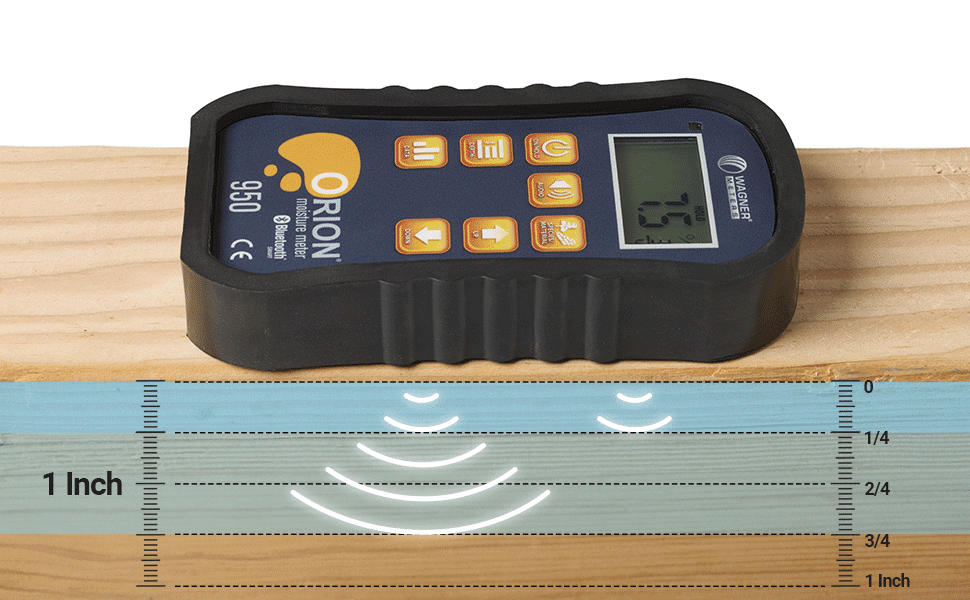
In short, pinless meters use electromagnetic waves to scan the wood’s surface without causing damage.
Pin-Type Wood Moisture Meters
These meters have two metal pins that are inserted into the wood. They measure moisture by analyzing the electrical resistance between the pins.
Water conducts electricity and dry wood resists it, so the amount of resistance tells the meter how much moisture is present. Drier wood produces more resistance than wetter wood.
Pin length determines how deep into the board you can read, and the pins leave two small holes at every test point.
summary
Moisture meters determine the moisture levels in wood using two primary technologies: pinless and pin-type. Pinless meters utilize electromagnetic waves, preserving the wood’s surface integrity, while pin-type meters use resistance technology, requiring pins to penetrate the wood. Each type has its limitations: pin meters can be influenced by the wood’s chemical composition, whereas pinless meters can be affected by density variations.
Wood Moisture Meter Buying Guide
Which is Better: Pin or Pinless?
Pinless
One of the benefits of a pinless meter is that it’s easier and faster to use than a pin meter. This allows users to have time to take enough readings to get a complete picture of the wood’s moisture level.
A pinless meter measures a wide swath of wood with each test, meaning fewer tests than a pin meter.
The features of pinless meters also allow you to switch measurement depth faster. Higher quality pinless meters come with dual depth measurement options, typically at a quarter and three-quarter-inch depths.
The other main advantage pinless meters have over pin meters is that they don’t cause damage to the wood. Every measurement taken with a pin meter drives two holes into the wood. A pinless wood meter never breaches the surface.
Pin
One of the benefits of using a pin meter is that you can test at a wide variety of depths within the wood. Pins come in different lengths, so you can always swap out pins to measure at different depths.
Measuring moisture at multiple depths creates a broader picture of the overall MC of the wood.
The challenge with pin meters is that accurate measurement depends on properly driven pins into the wood.
Inserting the pins properly can take a fair amount of pressure, especially the longer the probe. The denser the wood species, the more pressure is required to insert the pins properly.
The wood’s temperature can also impact the accuracy of the pin meter.
Another drawback: pin meters only measure the moisture content of the small area between the two probes, which means multiple tests must be conducted at different spots. And even more tests if you want to switch out pins to measure at multiple depths.
summary
Pinless and Pin moisture meters both have their benefits. Pinless meters are easier and faster to use, measure a wide swath of wood, and don’t cause damage to the wood. Pin meters can test at a wide variety of depths, but accurate measurement depends on properly driven pins, and the temperature of the wood can impact their accuracy.Pin meters also only measure the moisture content of a small area, requiring multiple tests to get a complete picture of the moisture level.
Do I Need a Moisture Meter?
Yes, if you’re a woodworker or DIY enthusiast, a wood moisture meter is essential. It allows you to accurately measure the moisture content of wood, which is critical in ensuring that your wood is of the right quality for your project.
With a wood moisture meter, you can determine the moisture content of your wood and adjust your project accordingly. You’ll know when the wood is ready to use and when it needs more time to acclimate.
Investing in a wood moisture meter may seem like an additional expense, but it will save you time and money in the long run and ensure that your wood projects turn out the way you envision them.
How Much Does a Moisture Meter Cost?
The cost of a moisture meter can vary depending on the brand, type, and features. A basic moisture meter can cost between $20 to $50 and is more commonly used for firewood. At the same time, a quality moisture meter can range from $100 to $500 or more, depending on the brand and features.
We suggest staying away from cheap moisture meters as they’re not accurate and less reliable.
What is the Best Moisture Meter?
Our choice for the best pinless moisture meter is the Orion® 950 pinless wood moisture meter.
But it depends on what you need from a meter. Plenty of articles rank the best moisture meters, so here is how to judge one for yourself.
Pinless or pin-type
For most users, a pinless meter is the better choice. Many professionals and DIYers prefer a pinless moisture meter because they don’t want the probes to ruin the wood. The more tests run with a pin meter, the more damage it does to the wood.
Yet without running enough tests, you won’t understand the wood’s moisture condition accurately, and that’s exactly what pin holes discourage you from doing.
Calibration
Most meters have to go back to the manufacturer for recalibration if they’re damaged or start reading inconsistently. Orion meters can be calibrated onsite with the included calibrator.
Field features
Another point of comparison is the scope of the field features you’ll actually use. These can include:
- an extended range of species settings
- calculating EMC for you
- storing large amounts of measurement data
- on-site calibration
What Are Acceptable Moisture Readings?
The normal moisture content of wood, or EMC, varies from 7% to 19% depending on the relative humidity of the surrounding air, based on the USDA Forest Products Laboratory’s Wood Handbook: Wood as an Engineering Material. That’s far too wide a range to work from on a specific project, so you need the figure for your own conditions.
Most wood flooring manufacturers dry the wood to between 6% and 9%.
The EMC applicable to a specific location depends on temperature and RH variations throughout the year in that region and how controlled the environment will be in the immediate usage area (i.e., is this wood for indoor or outdoor installation).
The wood used for construction has a higher EMC range of 9% to 14%.
Again, this will vary by location and species and is just the typical range.
Very dry climates fall below that range. In a city like Las Vegas, the local EMC can drop as low as 4%. Wood objects that spend their lives indoors, anything from violins to tables, have a more predictable target EMC range of 6% to 8%. For more detail, see our guide to acceptable moisture levels in wood.
If you’re testing moisture in drywall, read our guide on moisture meters for drywall.
Can a Moisture Meter Reading Be Wrong?
Yes, absolutely. A moisture meter reading could be wrong for various reasons including, but not limited to…
- It’s out of calibration.
- The wood’s surface is wet.
- You’ve entered the wrong wood species.
- The meter has been damaged.
- The pinless meter’s scanning plate has been damaged somehow, affecting its ability to contact the wood properly.
- The pins on your pin-type meter are bent, broken, or rusted.
- There are flaws in the wood, such as knots in the area of reading, that are affecting the wood’s specific gravity (density).
- The meter’s batteries are low.
The bottom line
The process of using a pin meter can be time-consuming, tedious, and exert stress on the physical meter, which tends to result in taking short-cuts when measuring moisture.
Overall, pinless meters are the way to go. But ultimately, it is up to you to determine the scope of your need for a comprehensive moisture meter for your wood projects.
In truth, the technology used by pin and pinless meters hasn’t changed significantly over the last two decades.
That’s why the objective tests of Wagner Meters moisture meters, linked below, from years ago remain valid today.
- Moisture Meter Studies
- Accuracy of a Capacitance-type and Three Resistance-type Pin Meters
- Assessment of the Accuracy of the Electronic Resistance and the Wagner Hand Held Meter
- Comparative testing of Wagner L612
- Study by the University of Florence and CNR/IRL
All four of these independent studies, commissioned by Wagner Meters, found that Wagner Meters pinless wood moisture meters were consistently and reliably more accurate in assessing wood moisture content than any meters tested against.
Now that you’ve read the buying guide and reviewed our moisture meter tests, take a look at the Orion moisture meters.
If you’re still new to wood moisture meters, we have a guide on how to use a moisture meter that can help you get started.
Avoiding pitfalls in moisture measurement can save you time and resources. Our article on common moisture meter mistakes covers frequent errors and how to prevent them.

As Sales Manager for Wagner Meters, Ron has more than 35 years of experience with instrumentation and measurement systems in different industries. In previous positions, he has served as Regional Sales Manager, Product and Projects Manager, and Sales Manager for manufacturers involved in measurement instrumentation.
Last updated on October 1st, 2026

 800-634-9961


Hello,
I am interested in such an Orion 950 device, for measuring wood moisture in the factory. But I have three questions:
1. To what depth does it measure wood moisture?
2. Is the measurement done by induction?
3. What is the percentage of the measured humidity difference, min. – max?
Thank you in advance,
Adrian,
The Orion 950 measures full thickness through a 37mm thick piece of wood. Basically an average moisture content measurement of the piece, not a measurement at a specific depth. This approximates the full thickness oven dry laboratory test. Also, measurement resolution is a tenth-of-a-percent moisture content.
The technology is based on a frequency, and not electrical resistance like a pin-type meter.
In our oven dry studies here, average error over a 50-sample set of wood samples in the 6%-10% moisture content range is typically less than + or- 1.25% when the meter is used correctly. As the moisture content of samples increases, accuracy is not as good, but this is true for all wood moisture meters; pin or non-pin.
Up to what depth in wood can the Orion 950 measure?
What would be a good model for checking RV walls, floors and ceilings?
Mike,
Any of our meters would work but I recommend the Orion 930 Dual depth meter. Use it in REL mode and measure something you know is dry, then measure against what you want measured and you will see if there is higher moisture content in what you are measuring vs. your dry piece. Use REL mode for walls and ceilings. For the floor, use the two digit number to determine your species selection. That can be found online or in our handout. This will give you actual moisture content percentage in the floor. We also have subfloor settings so you can use those. Hope this helps.
Can I use your meter to check for moisture after a water leak that went from 2nd floor to basement. We ran commercial fans for at least 5 days in all affected areas. We would be testing through dry wall mostly.
Melissa,
You can use our meters in REL Mode which is “Relative Mode”. This is a zero to 100 scale. 100 being wet, 0 being dry. You would take a baseline reading of what you know is dry, then measure against what you think has moisture. In this case it’s the drywall. It will give you an idea of whether there is higher MC in the drywall than your sample. Hope this helps.
You appear to totally overlook the largest need for readings- Wood framed construction, and when we can cover the walls, floors, and ceilings.
The readings are made on lumber typically 1.5 inches. The bottom plates, or boards in contact with the floors are typically the most moist.
I would not buy a meter from a manufacturer that ignores our multi billion dollar industry.
Thanks for the comment and suggestion. We’ve added some content about wood-framed construction.
https://www.wagnermeters.com/moisture-meters/wood-info/pin-moisture-meter/#wood-framed
Over this article you will get to know in detail about the Wood Moisture Meters Buying Guide. Things to be considering include many options listed in this link. It is very useful article and would suggest others too. I am sure many people will come to read this in future.
Hi Wagner Sales Team,
This is Harshad Raveshia from India, we are largest Wooden Pencil manufacturer in India and we are not able to find any accurate Moisture Meter in Indian Market.
We need many Moisture Meters on our Factory Shop floor to keep on monitoring our Pencil manufacturing process.
Our actual size of Pencil Wooden Slat is 5.00 Thickness X 75 mm Width X 185 mm Length and we use such 1.5 million slats every day. Right from Round Log cutting to converting it in to Pencil Slat, Seasoning it, Softening by Impregnation process and again Seasoning it and there after converting in to Raw Pencil, everywhere Moisture % play important role!
Can you suggest us some Good, Sturdy and Economical model which our staff?
Harshad Raveshia
+91-9898941111/+91-9099909080
Hi Harshad,
You can see a list of our pinless wood moisture meters here: https://www.wagnermeters.com/wood-moisture-meters/
Our top-rated moisture meter is the Orion 950.
If you’d like more information feel free to give us a call at 1-800-634-9961.
Thanks!
Hello. What is the best way to measure moisture behind tiles or acrylic in a shower area?
Ryan,
If you have an Orion moisture meter, you can put it in relative mode to measure moisture that way since you’re not testing moisture in wood. Try to find a dry spot to get a base reading, and then go from there. If you’re not sure if there are any dry spots, take lots of readings and the higher readings should be your wetter spots.
Hello I need to read a thin slat of 1/8″ thicknes, is it possible to get some accurate readings with some of your meters? thank you
Mr. Ruiz,
The model 920 would be the most appropriate. If you’re ONLY going to read real thin stuff, otherwise the Orion 930 would be the best option.
Ron
How does pinless moisture meters work with OSB. Can they read a value or do you have to calibrate a sample via oven drying to get a baseline?
Thanks for your help
Ken,
Wagner’s Orion line of handheld moisture meters has a setting for OSB. We developed this using oven-dry data a number of years ago.
Hope this helps.
Hi , I need a xilohygrometer to measure logs and firewood (with and without bark) Wich device do you recommend?
Thanks!
BR
Hi,
We sell pinless wood moisture meters. We have 5 different options to choose from. You can look at our comparison chart, https://www.wagnermeters.com/moisture-meters/comparison-matrix/ to see which one is best for you. You might consider the Orion 930 as it has dual depth measurements.
Thanks.
Hello,
I am looking to purchase the Wagner 910 Pinless Moisture Meter to my address in Islamabad, Pakistan. Could you give me quotation on the total cost of the product and shipping? Thanks
I like how you mentioned that they are pinless moisture meters for anyone who doesn’t want to put a hole in the tree. I don’t see a point in harming the tree to see it’s moisture level. If you put a hole in it and it ends up not being useful, well now it’s got a useless hole in it.
Kris,
Wagner does not have a distributor in Russia, but you can contact Wagner’s long-time distributor in Sweden, Woodcontrol. The main contact is Thomas Henriksson, and his email is Thomas@woodcontrol.se
Kris, how are you intending to use the meter?
Hello! We want to buy Orion 950, there is no delivery to Russia. Is there a representative of your company in Russia?
I hired an inspector after my newly installed engineered wood floors began end-lifting. The pictures he sent me show the pins of his meter inserted only a tiny bit. Are the readings accurate if the pins aren’t inserted very deep?
Molly:
Thanks for the question. The meter will be measuring from the tip of the pin to whatever depth the pins are inserted; whichever area has the most moisture. So it just depends on which area of the wood he/she was trying to measure.
For measuring woods moisture of a wood sample which is coated with lacquer or paint,
which type of moisture meter will be useful pin type of pinless?
We recommend a pinless meter. Our Orion moisture meters use IntelliSense technology which takes measurements deep into the wood.
Bonjour, pourquoi l’appareil qui est calibré à l’usine ne reste pas calibré, merci Mario
Mario,
All measurement instrumentation can, and will drift from factory calibration over time. This is why instrumentation needs to be calibrated (or be verified for calibration) typically every one or two years, based on international standards.
hello i am manufacturer of soccer balls can i use this meter on pvc or pu material for check the moisture on the sheet or please advice me what meter i used on this pvc and pu sheet for check the moisturising on the sheet.
and how can i purchase this please your early response will be highly appreciated
Hassan,
Wagner’s handheld moisture meters were designed for wood and wood-based materials, but perhaps I could steer you in a better direction, with the answers to some questions: 1) What is the minimum and maximum thickness of the material you wish to measure? 2) What is the moisture content range for these materials? 3) What is the required accuracy of the moisture measurements? 4) Would it be possible for someone or some company in the US to acquire samples of these materials in the US?
We have a requirement to measure Moisture content in Door frames & gypsum plasters,Which Moisture meter is suitable
Are the door frames flat or do they have some kind of profile or curve on the surface? What is the narrowest width?
Next, Wagner meters are typically designed to moisture the moisture content in solid wood. You can, however, get comparative (relative, not actual ‘moisture content %’) measurements of the moisture condition in some non-wood building materials such as gypsum-based wallboard.
Is pinned moisture meters are has ISO? can we use it in industries? if there is any policies can we have access to that?
Wagner does not make pin-type moisture meters for wood, but the manufacturers that do make them can inform you as to whether or not they have ISO certification. Wagner is not ISO certified.
if I think I have a leak in my wall or floor can I use this
Hi, Kevin.
The Wagner BI2200 would be the best model to use.
will foil lined wall insulation effect readings?
Yes, could very well affect the readings, causing false high measurements. If you are just trying to obtain ‘comparative’ (relative) measurements to try and find wet areas (vs. normal), then it may not be an issue anyway. I assume you are attempting to determine moisture condition on a wall, and not a wood floor.
Hi, I’m impressed the way it works and also it is user friendly. What is the price and how to purchase it. can you ship it via post as DHL / UPS cost is too much.and makes it uneconomical purchase while shipping to country like Pakistan.
BR, Sarshar
Hello Sir,
You can order it online on this website, we do ship to Pakistan. But at any rate we will be in touch tos see how we can help.
Dear sir
Do u manufacture a machine measuring the strength of wood
Hi Gerry, We do not manufacture anything for the strength of wood — only for moisture.